
Problem library
Fence & Post Hole Problems we solve in York Region
Every fence, deck, and pergola stands or falls on its post holes. Our tractor-mounted posthole digger bores clean, deep, consistent holes through clay and till that would defeat a hand auger — and gets a whole fence line drilled in a morning.
On this page
- Digging dozens of holes for a new fence
- Fence posts heaving out of the ground every winter
- A fence leaning on rotted-off posts
- Footing holes for a deck that must pass inspection
- Setting gate, mailbox, and lamp posts that stay plumb
- Pergola or gazebo footings in the middle of the lawn
- Ground too hard for a rented hand auger
- Posts for a tall privacy screen that catches the wind
- Paddock and garden fencing on rural acreage
- Setting a flagpole, basketball post, or farm sign
Digging dozens of holes for a new fence
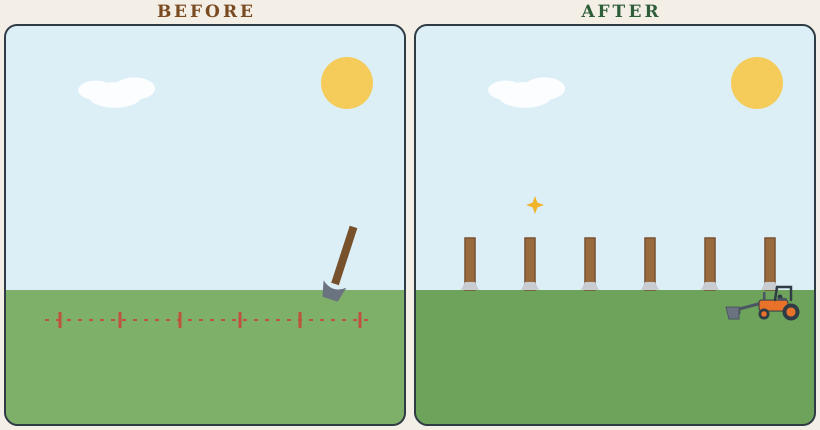
A typical backyard fence needs twenty or more holes, each a metre deep, and in our clay a rented hand auger will fight you for every one. Our tractor-mounted posthole digger bores uniform holes down the string line in minutes each, straight and to full depth. Whether you set the posts yourself or have us do it, the brutal part of fence building is done before lunch — with your arms still attached.
Fence posts heaving out of the ground every winter
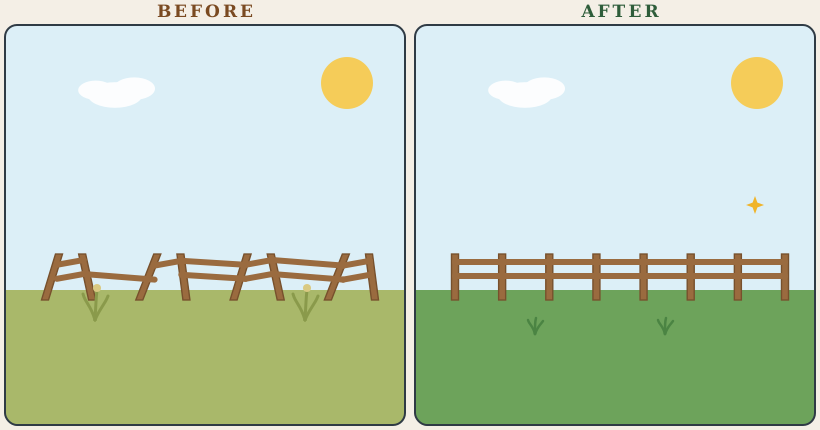
Posts that rise a little every winter were set too shallow: frost grips the post or its concrete collar and jacks it upward each freeze. The lasting fix is depth — bedding posts below frost depth, which in York Region means roughly 1.2 metres — with proper drainage so water is not trapped against the post. We pull the heaved posts, re-bore to full depth with the auger, and reset them so winter finally leaves your fence alone.
A fence leaning on rotted-off posts
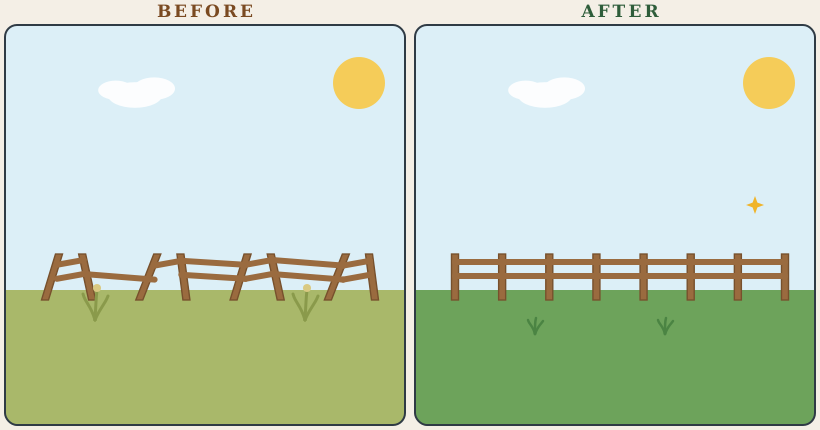
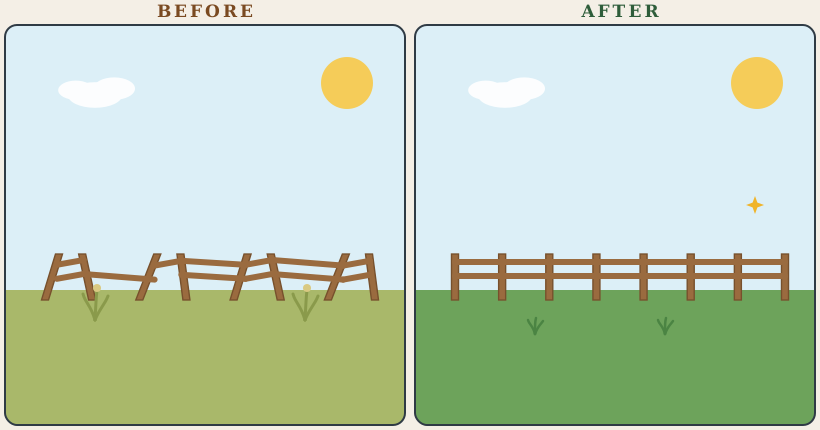
When a fence starts leaning in waves, the posts have usually rotted through at ground line while the panels above stayed sound. Rather than replace the whole fence, we extract the stumps and concrete plugs, bore fresh holes, and set new pressure-treated posts to which the existing panels are re-hung. It is the difference between a repair bill and a replacement bill — and the fence stands straighter than it has in years.
Footing holes for a deck that must pass inspection
Deck footings are structural: your building permit will specify diameter and a depth below frost, and the inspector will check the open holes before any concrete is poured. We bore footing holes to your permit's specification — clean, plumb, full-depth holes that pass inspection the first time. Homeowners building their own deck tell us this single service saved the project, because clay at a metre down does not yield to enthusiasm.
Setting gate, mailbox, and lamp posts that stay plumb
Single posts carry outsized loads: a driveway gate slams weight on its hinge post daily, and a leaning lamp or mailbox post makes the whole frontage look tired. We bore an oversized, full-depth hole, set the post plumb in properly placed concrete crowned to shed water, and brace it until cured. One post done right is a small job for a tractor and a long, wobbly afternoon without one — we are happy to do the small jobs.
Pergola or gazebo footings in the middle of the lawn
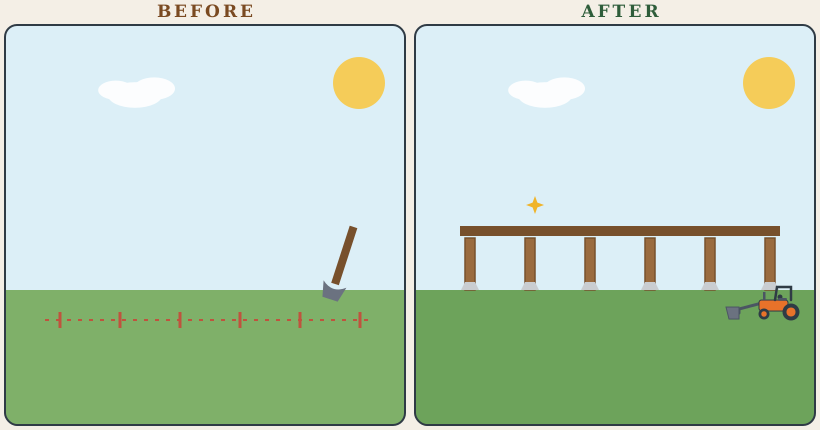
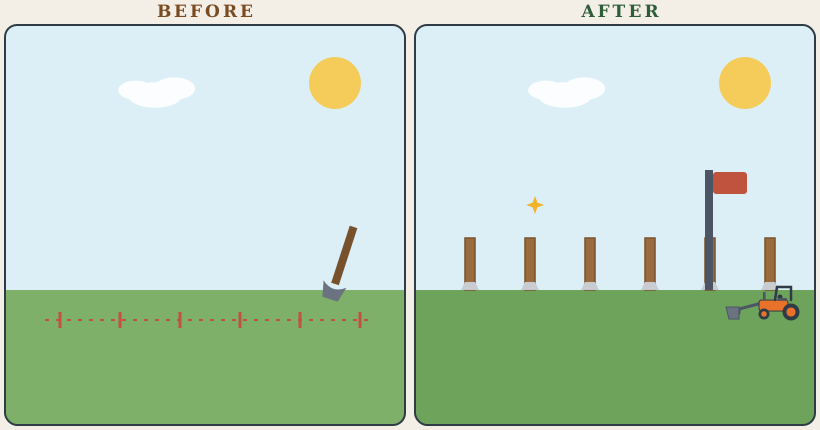
A pergola's grace depends on geometry: four or six posts, perfectly positioned and plumb, holes matched in depth so the frame lands level. We lay out the footprint to your plan, auger each footing below frost depth, and can set posts or concrete forms ready for your build. The turf between the holes is protected, and the spoil is loaded away rather than left in molehills across the lawn.
Ground too hard for a rented hand auger
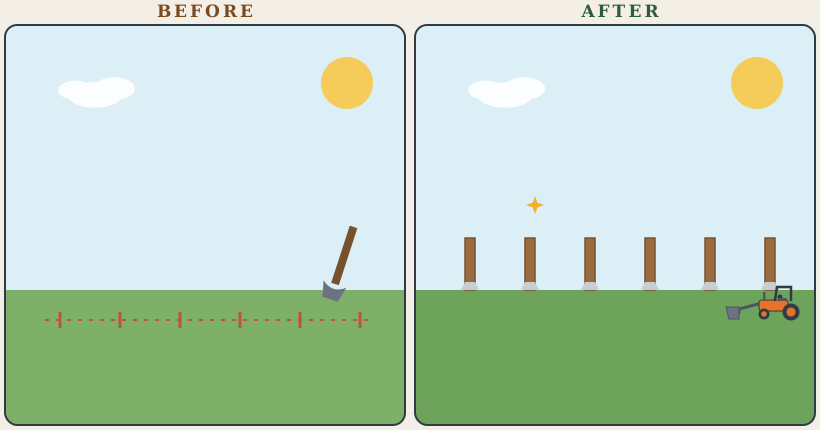
Rental-counter augers spin two people in circles the moment they meet dry clay, hardpan, or roots — a famous way to lose a Saturday and a friendship. A tractor auger brings hydraulic down-pressure and torque that walk through the same ground, and when we strike a rock or root too big to bore, the backhoe is already on the machine to deal with it. Bring us the holes that beat your rental; that is what the equipment is for.
Posts for a tall privacy screen that catches the wind
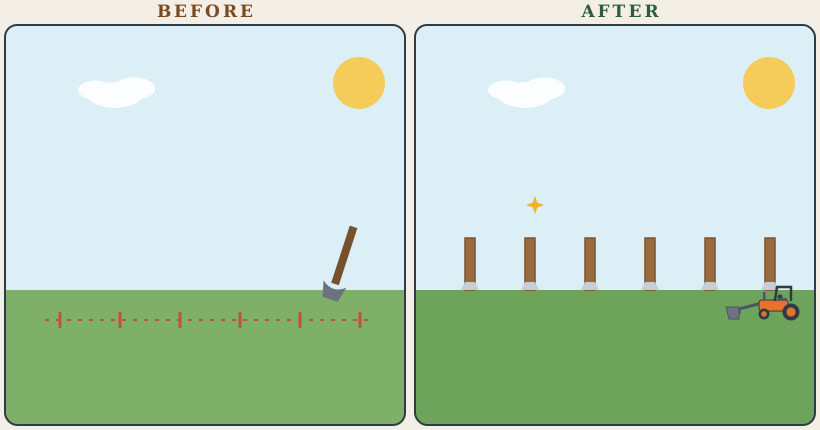
A tall solid privacy screen is a sail, and wind load is what tears out shallow-set screens in their first big storm. The engineering answer is deeper, larger-diameter holes and stouter posts than an ordinary fence — exactly the kind of hole that is miserable by hand and routine for the tractor auger. We bore to a depth matched to the screen height and soil, so your new privacy panel outlasts the weather that ruins the shortcuts.
Paddock and garden fencing on rural acreage
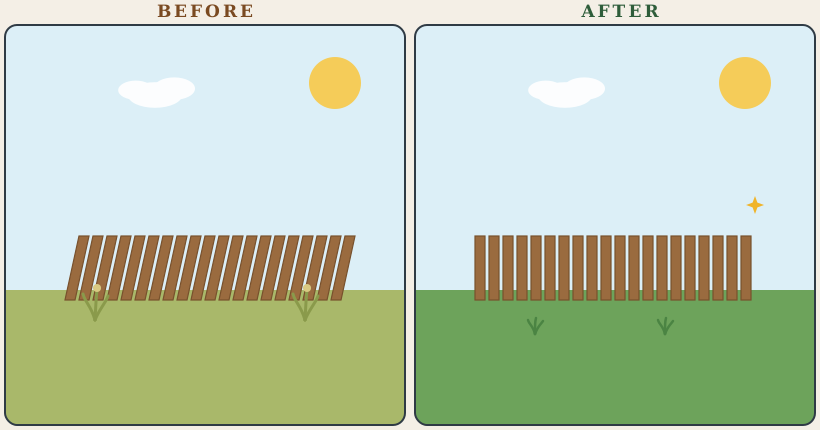
Hobby farms across King, East Gwillimbury, and Georgina need runs of paddock and garden fencing measured in hundreds of metres, not backyard panels. With the auger on the tractor we bore long post runs efficiently, carry posts and wire down the line in the loader, and keep the whole job moving at field pace. Deer fencing around gardens gets the same treatment — tall posts, deep holes, straight lines across real distance.
Setting a flagpole, basketball post, or farm sign
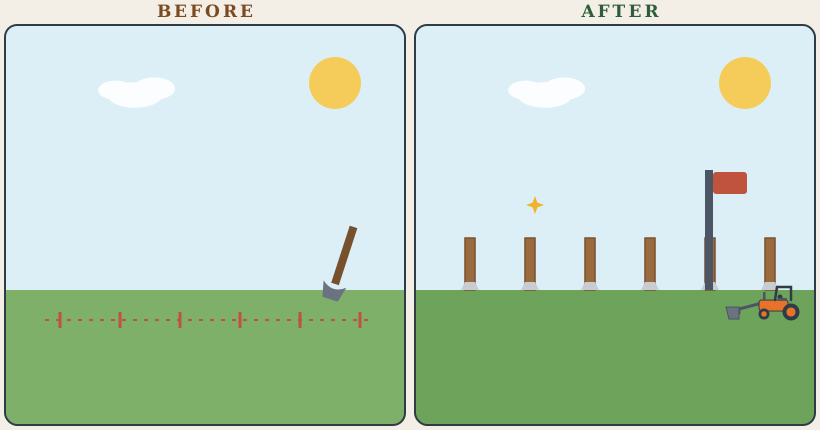
Flagpoles, in-ground basketball systems, and entrance signs all share one requirement: a deep, generous foundation hole with the anchor set dead plumb, because any lean is magnified over the pole's full height. We bore the foundation to the manufacturer's spec, help set the anchor bolts or sleeve true, and place concrete correctly. These are ten-minute holes for the tractor that reward you every time you look down the driveway.
Ready to fix yours?
Every solution on this page is a service we provide across York Region, Ontario — Aurora, Newmarket, Richmond Hill, Vaughan, Markham, King, Whitchurch-Stouffville, East Gwillimbury, Georgina. Get a free estimate