
Problem library
Grading & Leveling Problems we solve in York Region
A level, well-graded yard is the foundation for everything else — lawns, sheds, pools, and patios. Our Kubota L3902 with box blade and bucket puts precise grading within reach of any residential property.
On this page
- A lawn too bumpy to mow comfortably
- No level spot to put a shed
- Preparing a base strong enough for a hot tub
- Sloped yard where an above-ground pool should go
- A yard left rough and rutted after construction
- A delivered topsoil pile sitting on the driveway
- A sunken strip where a utility trench settled
- A backyard slope too steep to use
- Wanting privacy or noise screening from the road
- Storm washout gullies cutting through the yard
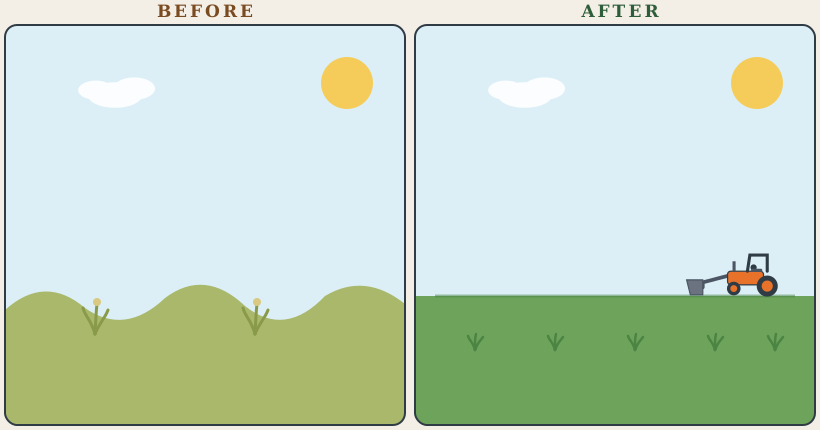
A lawn too bumpy to mow comfortably
Years of frost heave, settling, and grub or rodent activity leave many lawns so lumpy that mowing rattles your teeth and scalps the high spots. We till the worst areas, then work them smooth with the box blade, re-establishing an even plane that drains gently in one direction. After seeding, you get a lawn that mows in comfortable straight passes instead of a slow-motion obstacle course.
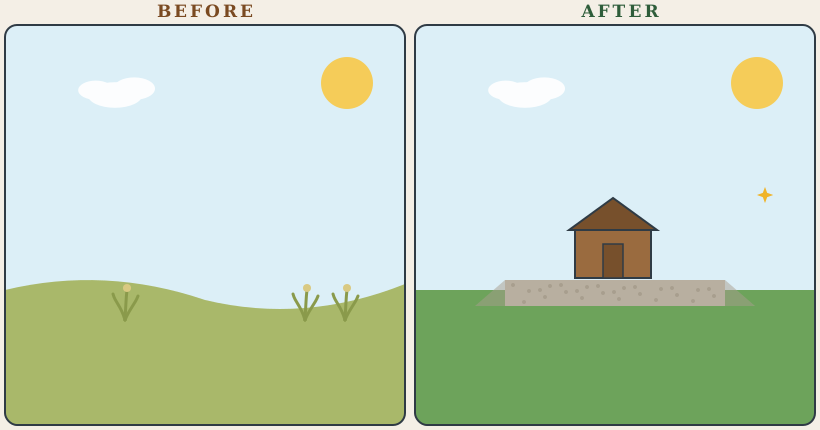
No level spot to put a shed
A shed placed on unlevel ground racks its frame, jams its doors, and rots its floor from ground contact. We strip the topsoil, cut and fill to a true level plane, and build a compacted gravel pad slightly larger than the shed footprint so water drains away from the structure. The result is a dry, stable base that keeps a shed square for decades — and we can do the same for gazebos and studios.
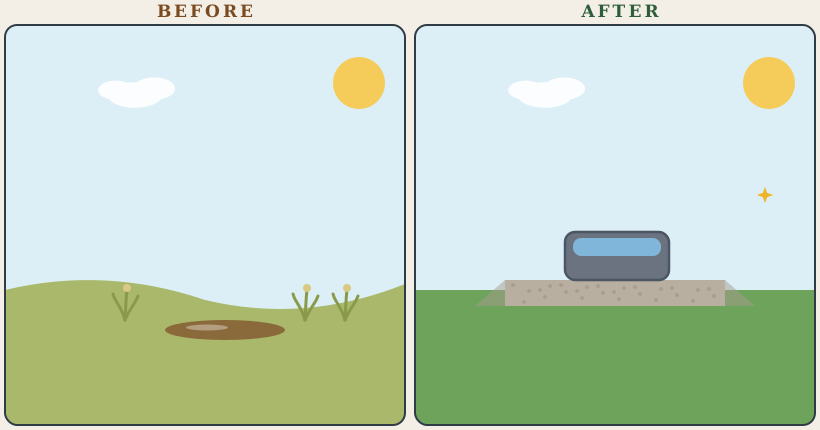
Preparing a base strong enough for a hot tub
A filled hot tub can weigh over two tonnes, and an unprepared lawn will settle unevenly beneath it, stressing the shell and plumbing. We excavate the organic layer, place and compact granular base in lifts, and finish dead level so the tub is fully supported at every point. Combined with a screeded top course, the pad is ready for the tub, its equipment, and years of freeze-thaw cycles.
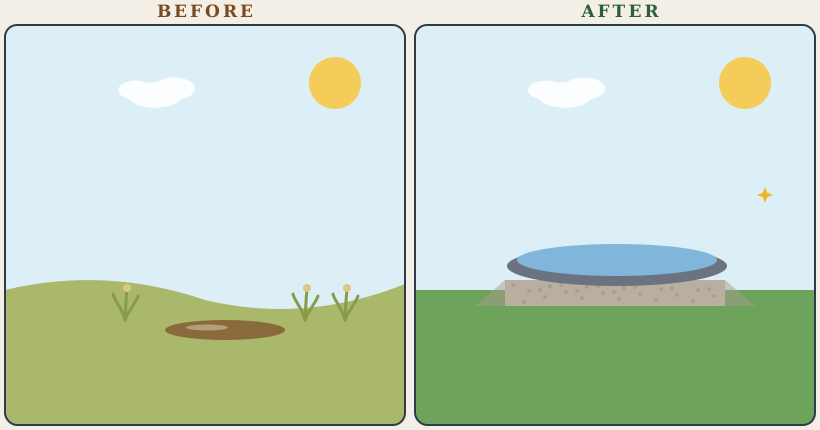
Sloped yard where an above-ground pool should go
Above-ground pool manufacturers demand a nearly perfectly level base, because even a few centimetres of tilt concentrates thousands of litres against one wall. Levelling a pool circle by shovel is a weekend of misery; our tractor cuts the high side, fills the low side, and compacts a level platform in hours. We finish with a fine screeded surface so the liner sits smooth and the water line runs true around the entire pool.
A yard left rough and rutted after construction
Builders and trades often leave a property compacted, rutted, and strewn with buried debris once the heavy equipment rolls away. We rip the compaction, pull surfaced debris, re-establish the designed drainage grades with the box blade, and spread topsoil ready for sod or seed. It is the step that turns a construction site back into a yard — done with a machine sized to finish the job, not re-wreck it.
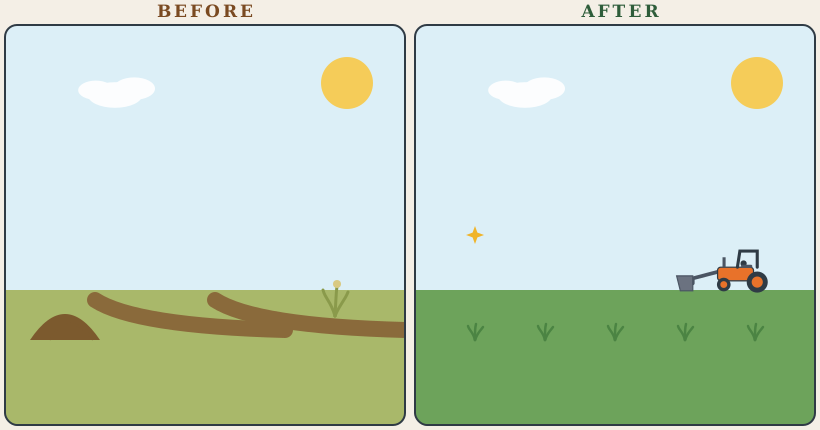
A delivered topsoil pile sitting on the driveway
Ten cubic yards of topsoil looks manageable until you start moving it by wheelbarrow — most homeowners give up with the pile half gone and their back fully gone. Our tractor moves and spreads a delivered pile in about an hour, feathering it to an even depth with the box blade and grading it to drain. The driveway is clear the same day, and the soil ends up where it actually helps your lawn.
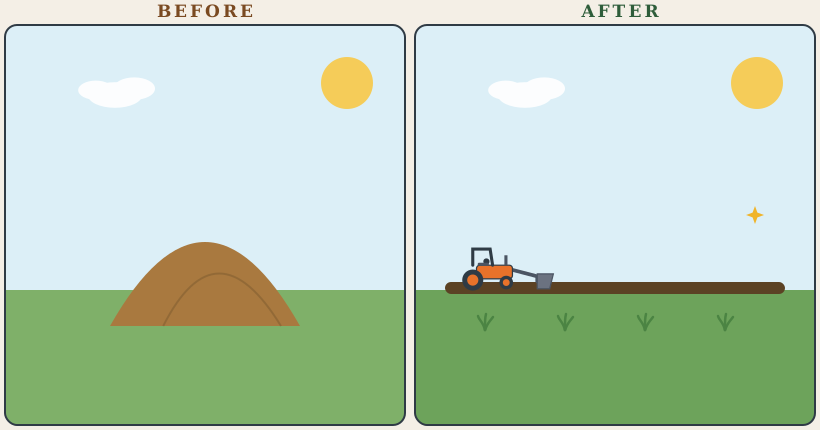
A sunken strip where a utility trench settled
The tell-tale sunken stripe across a lawn marks an old gas, water, or septic trench that was never compacted properly and has been settling ever since. We open the depression, backfill it in compacted lifts so it stops sinking, and blend the surface into the surrounding grade. One proper repair ends the annual ritual of topping up a trench line that swallows every load of soil thrown at it.
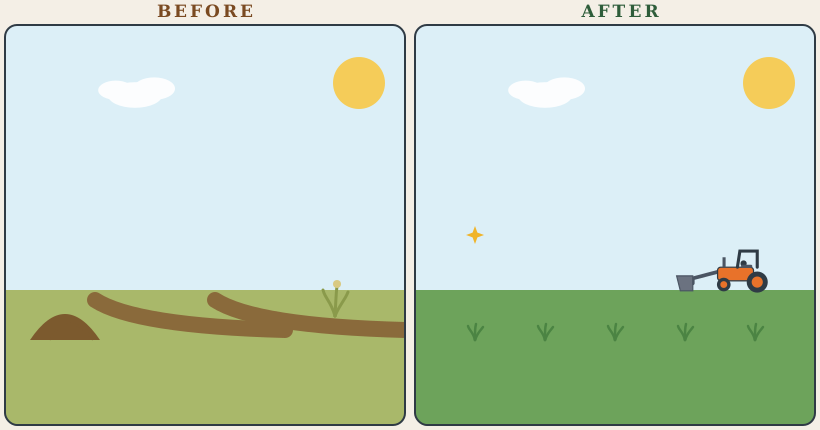
A backyard slope too steep to use
A steep backyard is space you pay taxes on but cannot use. By cutting into the hill and reusing that soil as fill below, we carve one or more level terraces connected by gentle transitions — flat ground for a patio set, play area, or garden where there was only a hillside. Working cut-to-fill on site means little or no soil needs to be trucked in or out, which keeps costs down.
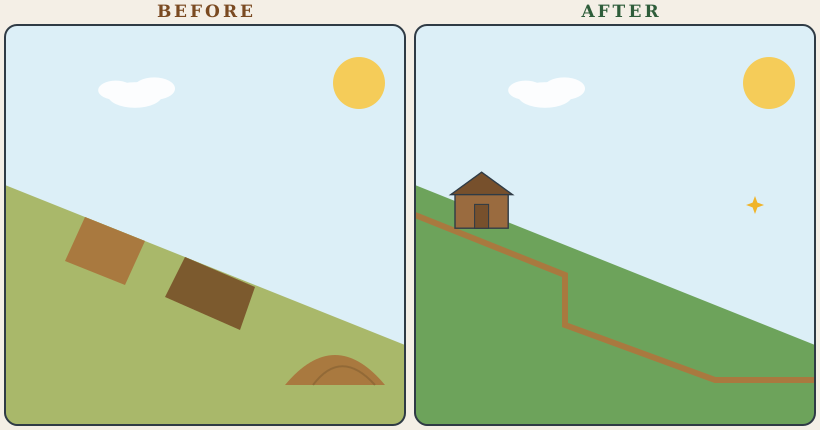
Wanting privacy or noise screening from the road
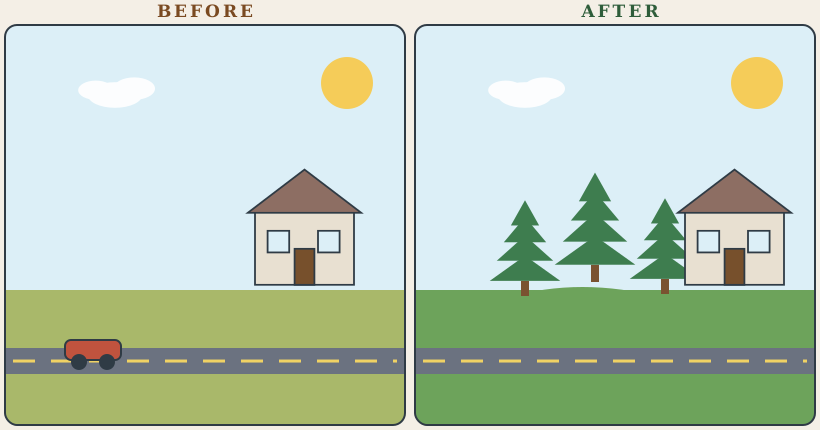
On open lots, a landscaped earth berm is one of the most effective and lowest-maintenance ways to gain privacy and soften road noise. We shape a mounded berm with rounded, mowable sides, top it with quality soil, and dress it with mulch ready for evergreen planting. Unlike a fence, a berm never rots, never blows down, and gets better looking every year as the planting matures.
Storm washout gullies cutting through the yard
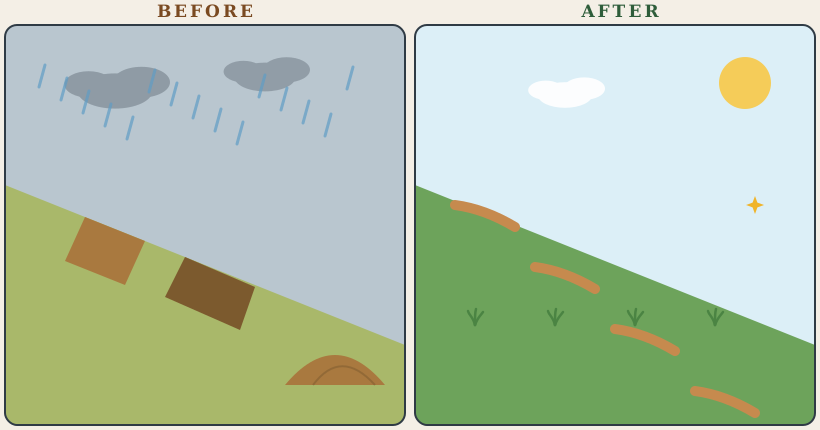
One intense storm can carve gullies through a yard and dump a delta of soil and gravel across the lawn below. We recover and replace the displaced material, regrade the damaged run, and — critically — reshape the grade above so the next storm's water is spread or diverted rather than concentrated into the same channel. Repairing the damage without fixing the cause just schedules the next washout; we do both.
Ready to fix yours?
Every solution on this page is a service we provide across York Region, Ontario — Aurora, Newmarket, Richmond Hill, Vaughan, Markham, King, Whitchurch-Stouffville, East Gwillimbury, Georgina. Get a free estimate