
Problem library
Gravel Driveway & Laneway Problems we solve in York Region
Gravel driveways and laneways across rural York Region take a beating from spring thaw, summer storms, and winter plowing. A tractor with a box blade is the right-sized tool to restore them without the cost of full reconstruction.
On this page
- Potholes multiplying down the driveway
- Washboard ripples shaking the car apart
- A flat, spongy driveway that holds water
- Fresh gravel dumped in piles, not spread
- Grass and soil creeping over the driveway edges
- A driveway too narrow for two vehicles or the trailer
- The driveway turning into a river in storms
- A laneway that goes soft every spring thaw
- Nowhere firm to park the trailer, RV, or boat
- Building a walkway or patio base without the shovel work
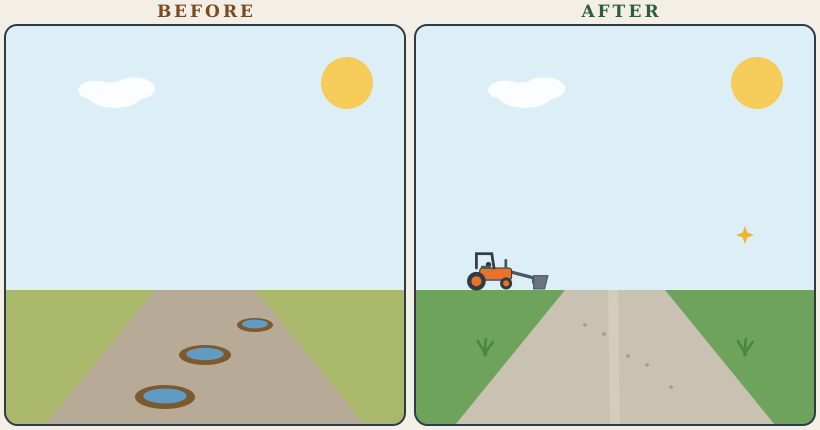
Potholes multiplying down the driveway
Raking gravel into a pothole is a one-rain fix — the hole's compacted bowl stays in place underneath and simply refills with water and reopens. We scarify the surface with the box blade's ripper teeth to break up the bowls, redistribute and re-crown the material, and compact it so water sheds to the edges. Treating the whole running surface, not hole by hole, is why the repair lasts.
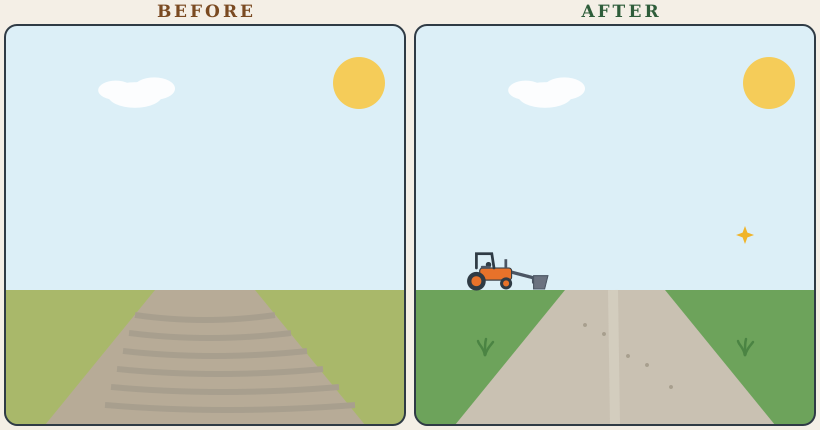
Washboard ripples shaking the car apart
Washboarding — those rhythmic ripples that build near the road entrance and on grades — comes from loose surface stone migrating under braking and acceleration. The cure is to cut below the corrugations, remix the fines and stone, and relay the surface compacted at a slight crown. Our box blade does exactly this in a few passes, and a properly graded surface resists corrugating far longer than a raked one.
A flat, spongy driveway that holds water
A gravel drive is designed with a slight crown so rain runs off both sides; years of traffic flatten it into a pan that soaks water straight down into the base. Once the base is saturated, every axle load pumps up mud and the surface turns soft. We re-cut the crown with the box blade and re-establish edge drainage, keeping the base dry — which is the whole secret to a firm gravel driveway.
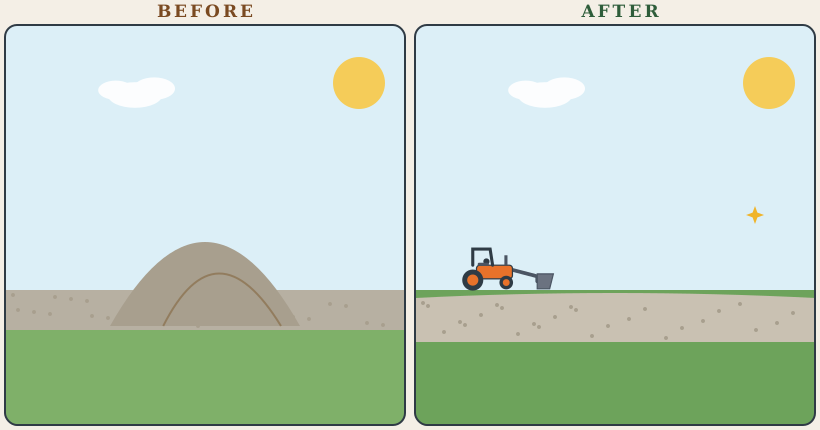
Fresh gravel dumped in piles, not spread
Gravel suppliers deliver; they rarely spread. A tandem load left in heaps blocks the drive and, if spread thin by hand, ends up wavy and loose. We spread new gravel to a uniform depth with the box blade, blend it into the existing surface, crown it, and compact it under the tractor's passes. The difference between dumped gravel and graded gravel is the difference between a stone pile and a driveway.
Grass and soil creeping over the driveway edges
Every year sod creeps inward and berms of plowed gravel and soil build along the edges, narrowing the drive and trapping water on the surface like a bathtub rim. We cut back the encroaching sod, pull the berms, and recover the buried gravel back onto the running surface — often reclaiming enough material to postpone buying new stone. The driveway gets wider, drier, and firmer in the same operation.
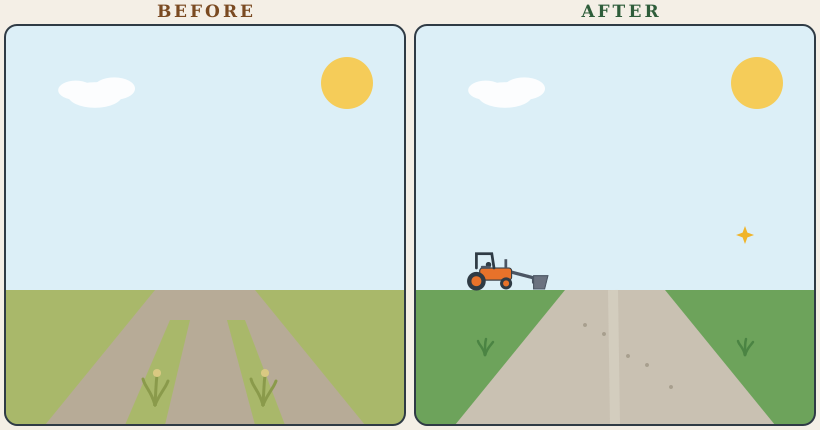
A driveway too narrow for two vehicles or the trailer
Whether it is a second car, a camper, or a boat, many households outgrow a single-lane drive. We strip the sod along the new alignment, excavate to a stable subgrade, place and compact granular base, and grade the widened surface as one continuous plane with the existing drive. A tractor-scale operation keeps the cost proportionate to what is, at heart, a strip of new gravel — not a road project.
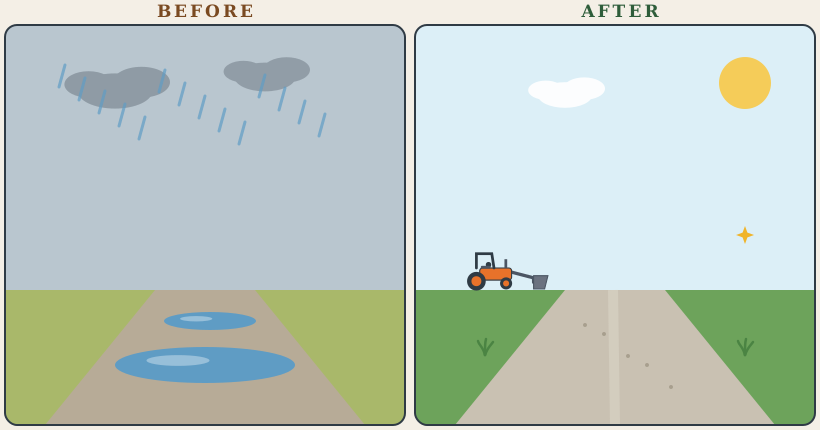
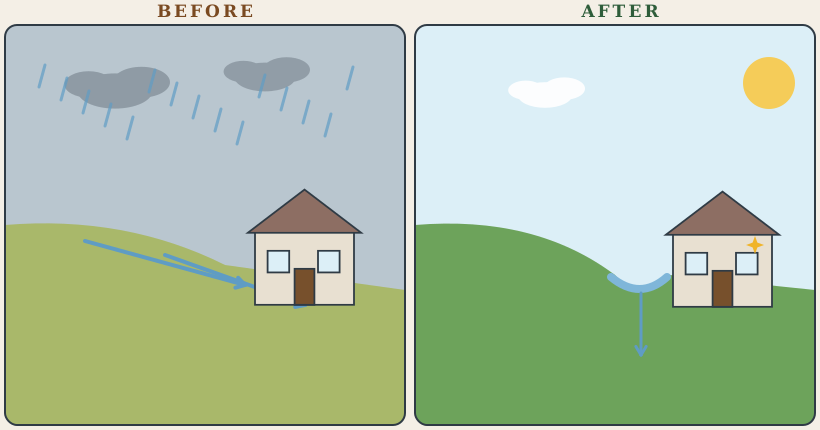
The driveway turning into a river in storms
A sloped driveway can act as a paved river, collecting water from the whole frontage and delivering it to your garage door. We intercept the flow with graded side swales, cross-drains, or a shallow surface channel that kicks water off the drive at intervals, and regrade the surface so it sheds sideways rather than funnelling downhill. Managing the water is cheaper than annually replacing the gravel it steals.
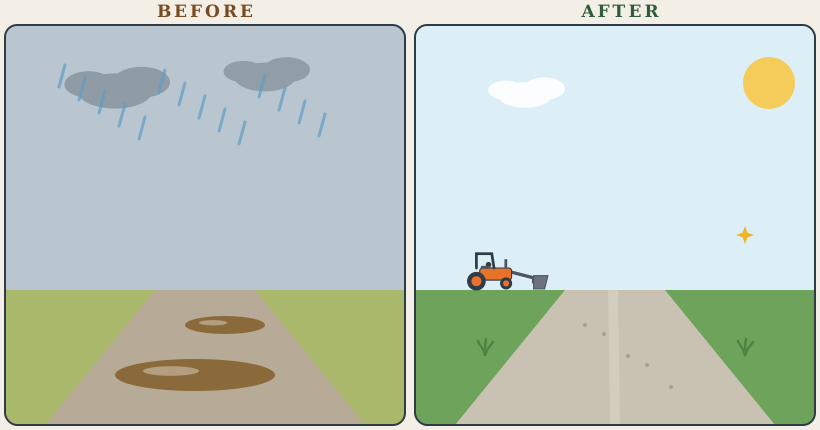
A laneway that goes soft every spring thaw
Spring thaw releases a winter's worth of frozen moisture into the driveway base, and sections built over topsoil or clay turn to porridge. We excavate the failed pockets down to competent ground, backfill with clean granular material — adding geotextile fabric where the subgrade is truly poor — and regrade the surface. Fixing the soft spots properly ends the yearly cycle of throwing good gravel into bad base.
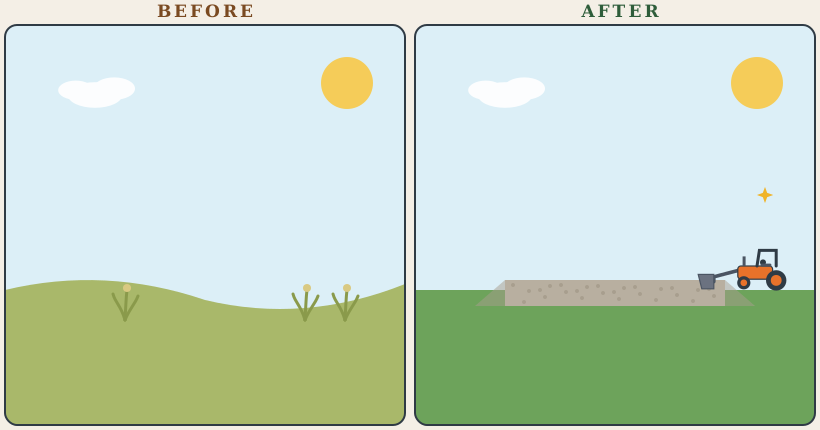
Nowhere firm to park the trailer, RV, or boat
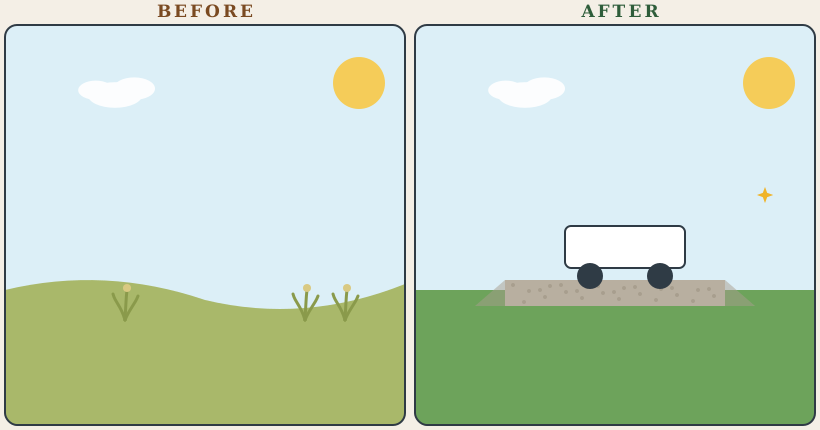
Parking a trailer or RV on lawn ruts the ground, kills the grass, and lets tires sink over winter. We build a dedicated gravel pad: topsoil stripped, base compacted in lifts, surface graded to drain, and edges blended into the lawn for clean mowing. It keeps your equipment on firm, dry footing year-round and keeps the lawn a lawn — and it often doubles as overflow guest parking.
Building a walkway or patio base without the shovel work
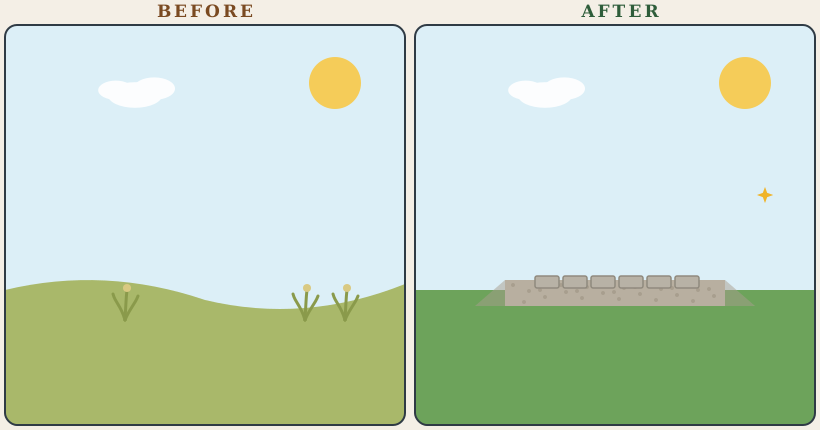
The hardest part of any paver walkway or patio is invisible when it is done: excavating the bed and placing the compacted granular base. Doing it by hand means moving tonnes of soil and stone twice. Our tractor excavates to consistent depth, hauls away the spoil, and places base material ready for screeding — leaving you (or your landscaper) the satisfying part of laying stone on a base that will not settle.
Ready to fix yours?
Every solution on this page is a service we provide across York Region, Ontario — Aurora, Newmarket, Richmond Hill, Vaughan, Markham, King, Whitchurch-Stouffville, East Gwillimbury, Georgina. Get a free estimate