
Problem library
Land Clearing & Brush Problems we solve in York Region
Overgrown corners, invasive thickets, and storm debris make good land unusable. We clear brush with chainsaws, tractor, and chipper — and turn most of what we cut into mulch on the spot instead of hauling bills.
On this page
- A back section of the property gone completely wild
- Buckthorn taking over the property edges
- A fence line swallowed by brush and saplings
- A yard full of storm-downed limbs and debris
- Wanting walking trails through your own bush
- Brush blocking the sightline at the end of the driveway
- Removing a dead or half-dead hedge entirely
- A brush pile you're not allowed to burn
- Clearing a building or garage site on a treed lot
- Aggressive groundcover swallowing the garden and lawn edge
A back section of the property gone completely wild
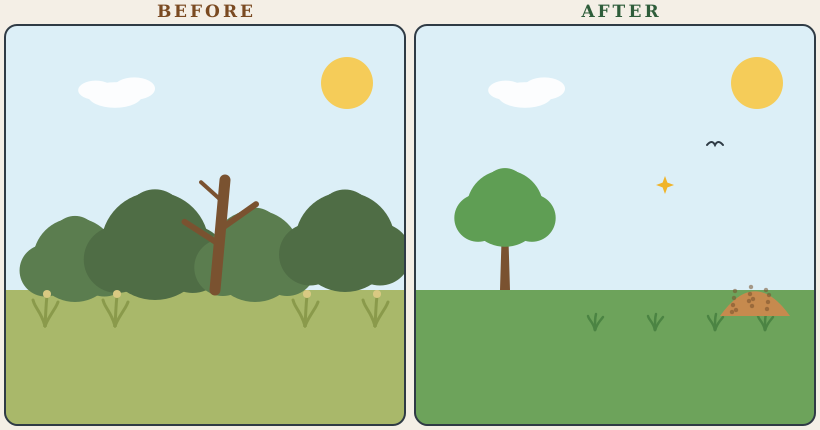
The back third of many rural and estate lots quietly reverts to thicket — buckthorn, wild grape, dead elms, and dogwood so dense you cannot walk it. We cut the brush and scrub trees, chip everything chippable into mulch that goes right back onto the cleared ground, and grade out the stumps and hummocks. Land you had mentally written off comes back into use as lawn, meadow, orchard, or simply space you can walk again.
Buckthorn taking over the property edges
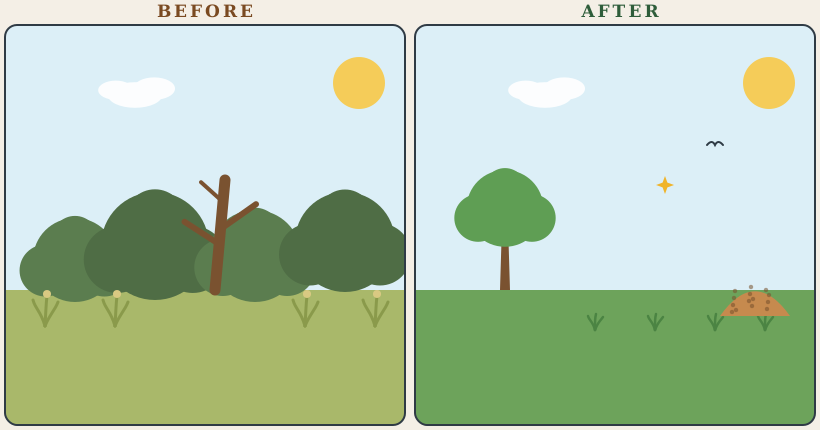
Common buckthorn — Ontario's most notorious invasive shrub — shades out everything beneath it, and birds replant its berries along every fence line. Cutting alone regrows it fivefold, so we cut and then either extract the root crowns with the backhoe or treat stumps appropriately so they do not resprout. The brush is chipped on site, and repeat passes catch the seed-bank stragglers. It is a war, but a winnable one with the right equipment.
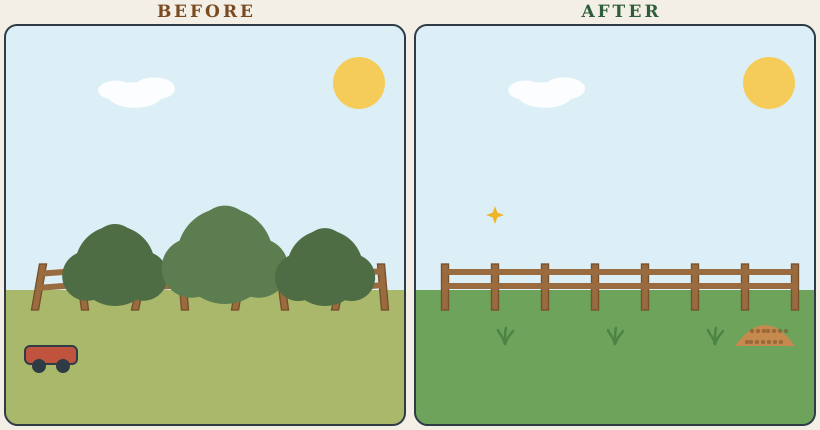
A fence line swallowed by brush and saplings
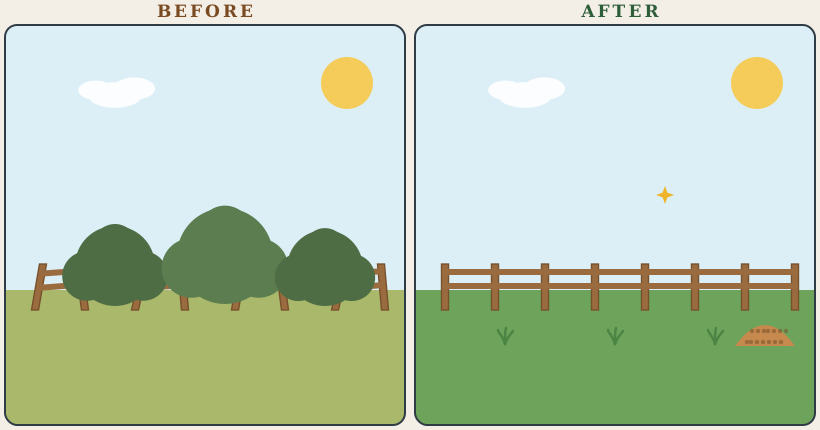
Left alone, fence rows collect volunteer saplings whose trunks slowly engulf wire and push posts out of line — and whose removal gets harder every year. We cut the woody growth along the line, chip it as we go, and pull the stumps that would regrow through the new fence. A clear fence line makes fence repair possible, marks the boundary you actually own, and stops feeding deadfall onto whatever is beneath.
A yard full of storm-downed limbs and debris
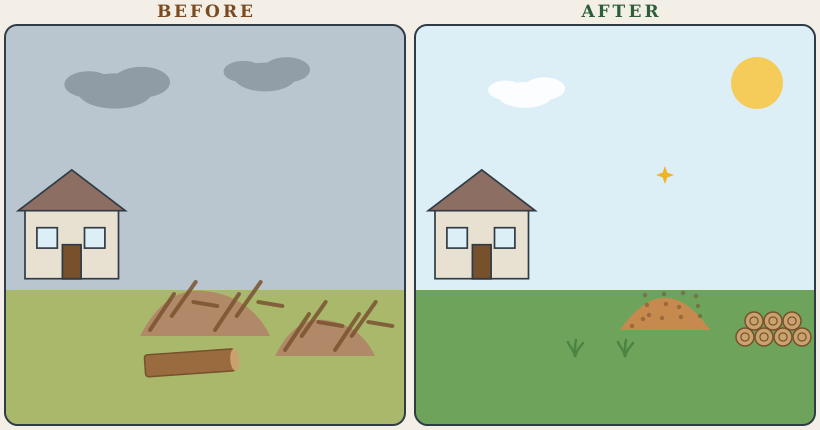
After a major blow, a treed lot can be ankle-deep in limbs with a few whole trees down for punctuation — weeks of hand-hauling for a homeowner. We buck the big wood, feed everything else through the chipper, and either leave you a mulch pile and firewood logs or haul the lot away in the dump trailer. A crew, a tractor, and a chipper compress that mess into a single day, and your yard stops looking like the weather report.
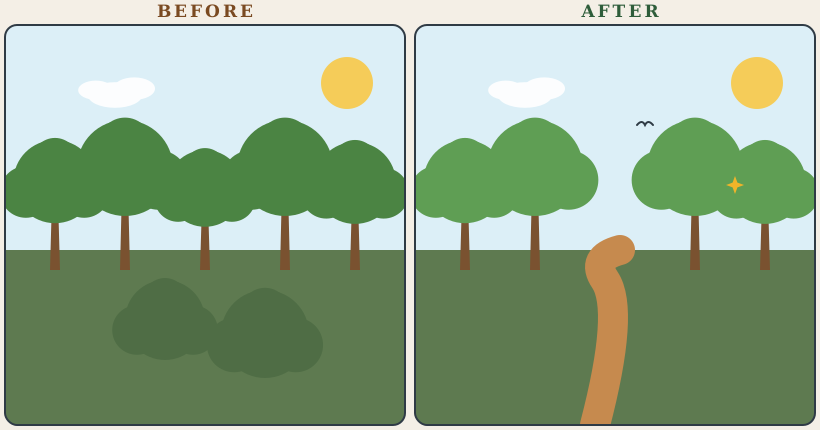
Wanting walking trails through your own bush
A wooded acreage you cannot walk through is scenery, not property. We lay out and cut trails that follow the land — around specimen trees, along the high ground — clearing to a comfortable width and chipping the cuttings into a soft trail surface as we go. The loader smooths the tread and bridges the wet spots with chips. Few projects change how a family uses its land more than a simple loop trail.
Brush blocking the sightline at the end of the driveway
If you inch the car out blind because cedars and brush screen the oncoming traffic, the entrance is a genuine safety hazard — especially on rural roads where traffic moves fast. We clear and cut back the growth in the sight triangles both ways, prune retained trees up high enough to see under, and chip the brush on site. It is a small job with an outsized payoff: you can finally see what is coming.
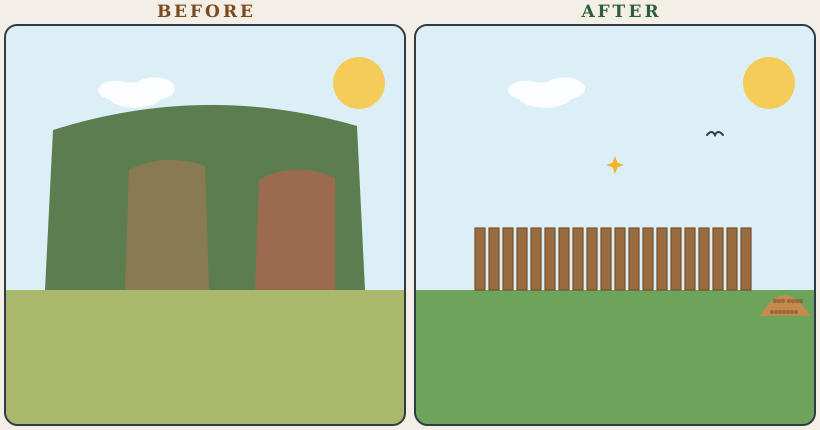
Removing a dead or half-dead hedge entirely
A hedge that is brown in patches will never be green again in those patches — cedar does not regrow from bare wood — and a half-dead hedge is worse than none. We cut the hedge, chip it into mulch, and pull the root balls with the backhoe so the planting strip is genuinely clear. From there: new hedge, fence, or open lawn. The transformation of the property's face in a single day startles most owners.
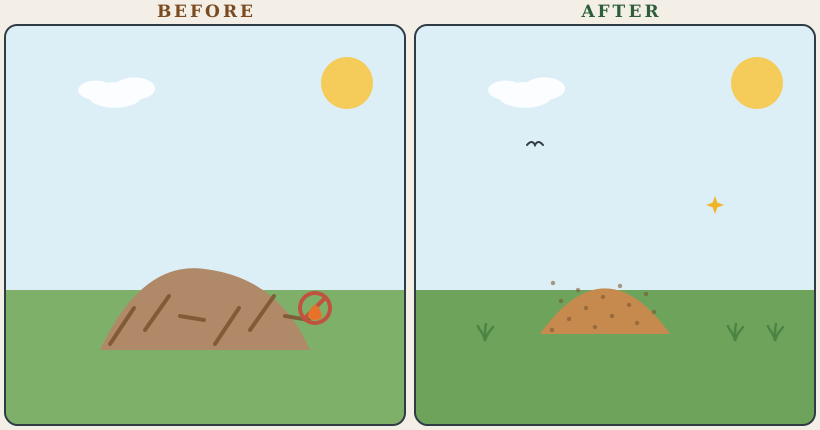
A brush pile you're not allowed to burn
Open burning is restricted or permit-bound in most York Region municipalities, and a giant brush pile becomes a permanent monument — and prime rat and wasp habitat. Our chipper eats accumulated piles branch by branch and converts them into clean chips: mulch for your beds and paths, or a load we haul away in the dump trailer. The corner of the yard the pile occupied comes back, minus the wildlife hotel.
Clearing a building or garage site on a treed lot
Before a garage, shop, or addition can start, the footprint must be cleared of trees, stumps, and brush — a scope too small for land-clearing contractors but too big for a homeowner's Saturday. We fell and process the trees (keeping any wood you want as lumber logs or firewood), chip the tops, excavate the stumps, and rough-grade the site for the builder. One mobilization takes the lot from wooded to build-ready.
Aggressive groundcover swallowing the garden and lawn edge
Goutweed, periwinkle, and their allies spread by root fragments, which is exactly why hand-pulling and casual tilling make them worse. Our approach is removal at depth: strip the infested layer with the loader, haul it away in the dump trailer rather than composting it on site, and refill with clean soil. Followed by vigilant spot-control for a season, it is the realistic path out of a groundcover infestation — we will tell you honestly that no single pass ends one.
Ready to fix yours?
Every solution on this page is a service we provide across York Region, Ontario — Aurora, Newmarket, Richmond Hill, Vaughan, Markham, King, Whitchurch-Stouffville, East Gwillimbury, Georgina. Get a free estimate