
Problem library
Stump, Root & Digging Problems we solve in York Region
The backhoe on our Kubota L3902 handles the digging jobs that stop yard projects cold — stumps, roots, trenches, boulders, and old buried surprises.
On this page
- Stumps left behind blocking the lawn
- Surface roots wrecking the lawn and the mower blades
- Overgrown foundation shrubs too big to dig by hand
- Trenching for power, water, or irrigation lines
- Boulders in the way of the lawn or project
- Old concrete footings and posts buried in the yard
- Wanting a garden pond without weeks of digging
- A cracked old walkway or patio that needs to go
- Planting holes for large caliper trees
- Excavating beside the house for drainage or repairs
Stumps left behind blocking the lawn
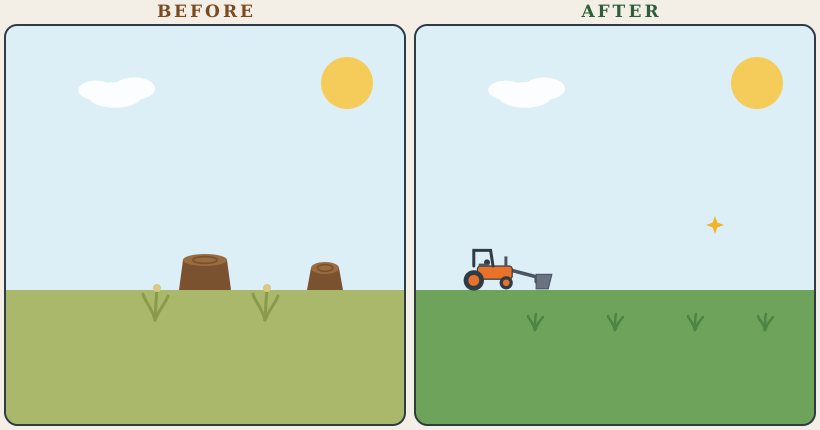
A stump is a mowing obstacle, a trip hazard, and a decade-long invitation to carpenter ants and fungus. Unlike grinding, which leaves the root mass to rot and settle, our backhoe excavates the stump and main roots entirely, so you can plant, build, or lay lawn on the spot immediately. We backfill with clean soil, compact it, and finish the grade — no shallow bowl appearing two summers later where the ground sank.
Surface roots wrecking the lawn and the mower blades
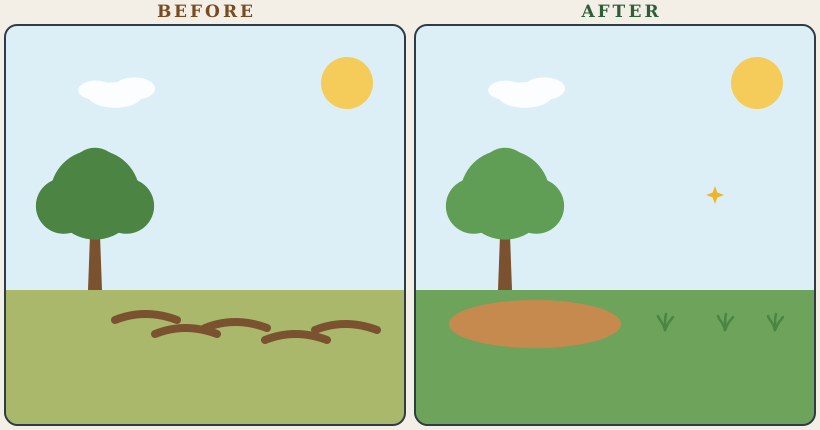
Maples and willows famously push roots along the surface, catching mower blades and buckling nearby walkways. The safe fixes depend on whether the tree is staying: for a keeper, we cover roots with a shallow mulch bed shaped to mow around, since cutting major roots destabilizes the tree; where the tree is already gone or coming down, we excavate the offending roots outright and restore smooth, plantable grade.
Overgrown foundation shrubs too big to dig by hand
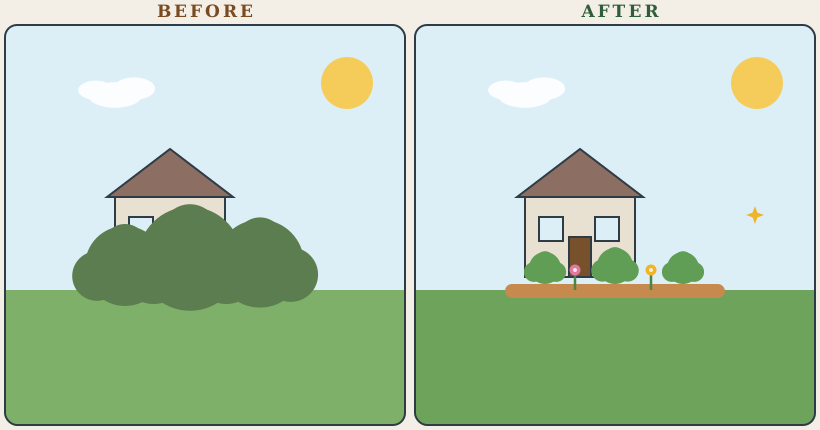
Forty-year-old junipers and yews hold the house in a woody headlock, and their root balls laugh at shovels. We cut the tops, chip them into mulch, then pop the root balls with the backhoe in minutes each — working carefully at the foundation where hand-digging finishes what the machine starts. The beds are left cleaned, graded, and ready for a modern planting that will not eat the front windows.
Trenching for power, water, or irrigation lines
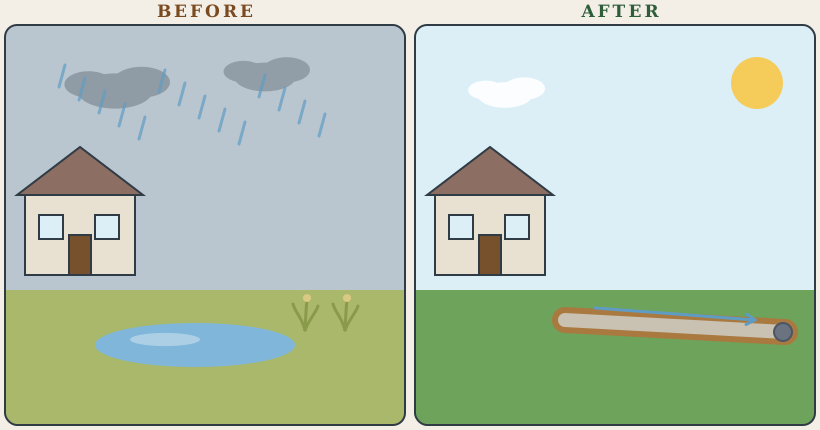
Getting power to a new shed, water to a garden, or wiring to a gate means a trench at proper depth — and in our clay, that is not a fun weekend with a spade. After utility locates are completed (a legal must before any dig in Ontario), our backhoe cuts a clean trench to the depth your electrician or plumber specifies, and we backfill and restore the surface once their work is inspected. You buy the trades' expertise; we supply the muscle.
Boulders in the way of the lawn or project
Glacial till left York Region seeded with boulders that surface through lawns and ambush every digging project. Our backhoe pries them free and the loader carries them off — or repositions them as landscape features, because a boulder you cannot move for free is a feature stone you would otherwise buy. Either way, the hole is backfilled, compacted, and bladed smooth so the lawn shows no scar.
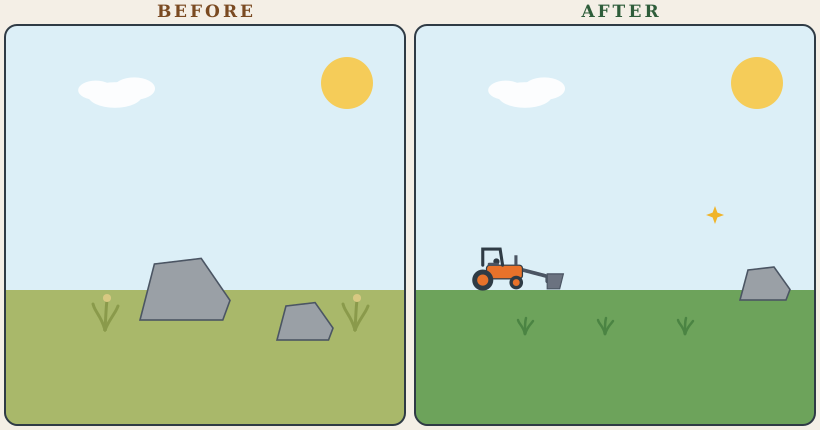
Old concrete footings and posts buried in the yard
Previous owners leave gifts: fence post plugs, clothesline anchors, deck footings, and mystery slabs lurking just under the sod. Each one stops a new fence or garden dead. We excavate the concrete with the backhoe, load it in the dump trailer for proper disposal, and backfill the holes with compacted soil. A morning of machine work erases decades of accumulated underground clutter.
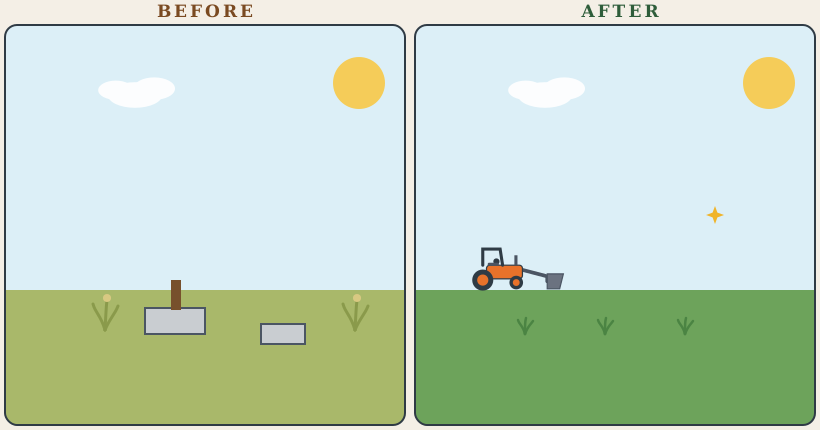
Wanting a garden pond without weeks of digging
A pond dig is deceptive: even a modest water feature means excavating and moving several cubic metres of soil, shaped with shelved edges for plants and safety. Our backhoe sculpts the basin to your liner plan in hours, and the spoil becomes a planted berm or fills a low spot elsewhere on the property rather than paying to leave in a bin. You handle the fun part — liner, pump, plants — on a hole that is actually the right shape.
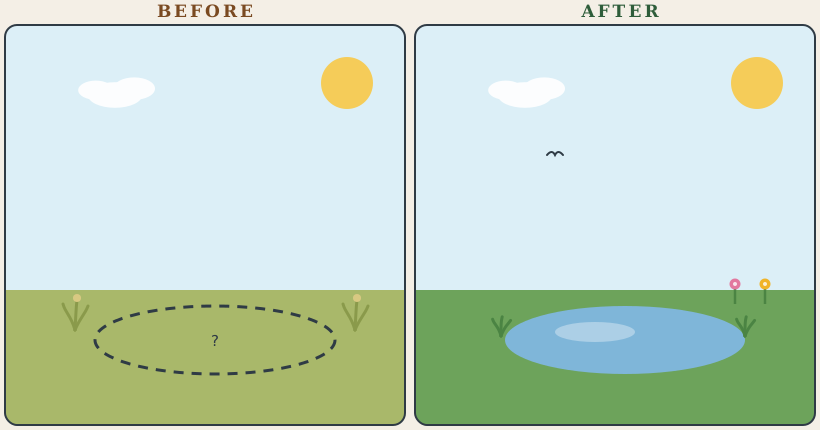
A cracked old walkway or patio that needs to go
Heaved, cracked concrete paths are ankle-turners you stop seeing until a guest trips on one. We break out the old concrete with the backhoe, load it into the dump trailer for recycling, and either grade the route back to lawn or excavate and place granular base ready for a new surface. What a sledgehammer crew does in days of dust and jarring labour, the machine does in hours.
Planting holes for large caliper trees
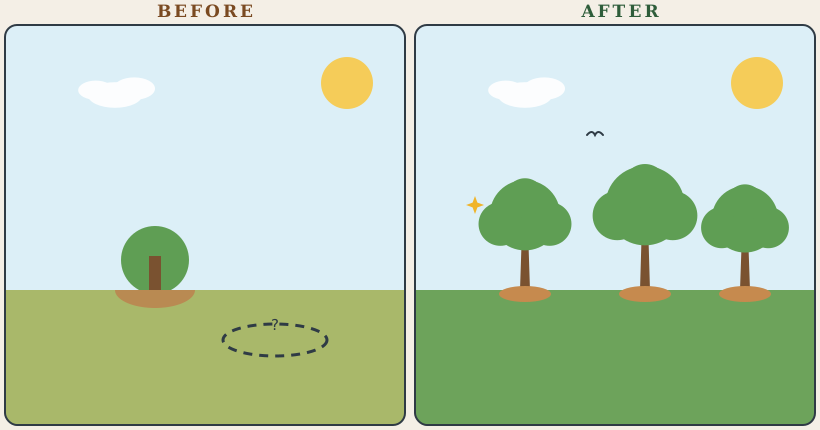
A ball-and-burlap tree needs a wide, shallow planting hole — broad enough to loosen the surrounding soil the roots must colonize, but no deeper than the root ball, which must rest on undisturbed ground. Digging that geometry by hand in clay takes hours per tree. We dig to nursery specification, set the tree at correct depth with the loader, and backfill properly — the difference between a tree that establishes and one that sulks for years.
Excavating beside the house for drainage or repairs
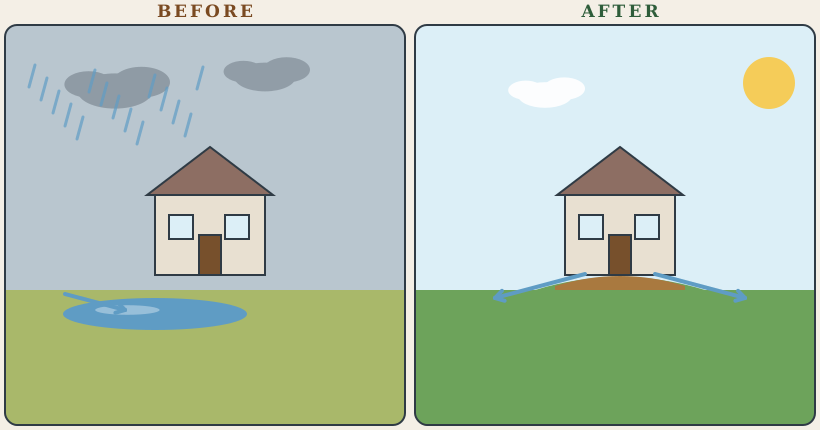
Flooding window wells and damp basement walls sometimes require opening the soil beside the foundation — to rebuild a well, add drainage gravel, or expose the wall for your waterproofing contractor. Our compact backhoe excavates precisely alongside the house where full-size equipment cannot fit, with final inches by hand at the wall. When the repair passes inspection, we backfill in compacted lifts and regrade so water sheds away from the house.
Ready to fix yours?
Every solution on this page is a service we provide across York Region, Ontario — Aurora, Newmarket, Richmond Hill, Vaughan, Markham, King, Whitchurch-Stouffville, East Gwillimbury, Georgina. Get a free estimate